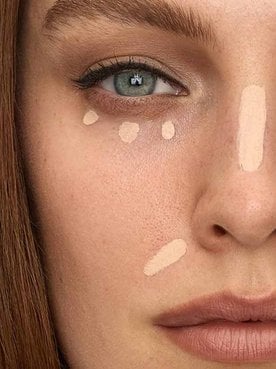
How to Select the Right Foundation Shade: Your Guide to a Flawless Match
Create flawless base, every time


Traditionally, finding the right foundation meant swatching multiple shades in store and checking them under different lights. While online shopping made buying convenient, choosing the correct shade was still a challenge. So, how to find the right foundation shade without guesswork?
Today, virtual try-on tools and smarter shade guides have changed how we shop for foundation online. This guide breaks down how to find the right foundation shade quickly and confidently for a seamless, natural-looking match.
Struggling to pick the perfect base online? Learn how to select foundation shade by understanding your skin tone, undertone, lighting, and coverage preferences; and common mistakes to avoid. With the right tips and smart tools, you can confidently find the right foundation shade and achieve a flawless match every time.
Table of Content
Before learning how to select foundation shade, it’s essential to understand the difference between skin tone and undertone.
Knowing how to find your skin shade starts with identifying both these elements. While your skin tone may change slightly with sun exposure, your undertone remains consistent.
If you're unsure how to find the right foundation shade, always start here. Undertone is often the deciding factor between a perfect match and an ashy or orange finish.
Understanding undertones simplifies choosing foundation shade dramatically. Here’s how to do it easily.
These simple methods help you understand how to find your skin shade more accurately before making an online purchase.
One of the easiest ways to learn how to find the right foundation shade online is by using a foundation you already own.
Check the shade name and undertone description of your current match. Many brands provide online shade comparison tools that recommend equivalents across different formulas. This makes how to select foundation shade online much easier, especially when switching brands.
If your current foundation feels slightly too pink or too yellow, use that feedback to refine your next choice. Learning from past mismatches is key when figuring out how to select foundation shade more precisely.
Foundation brands typically categorize shades by depth (light to deep) and undertone (cool, warm, neutral). Carefully reading these descriptions is crucial when deciding how to select foundation shade online.
Look for terms like:
Shade charts often display swatches but remember that screens can distort color. This is why understanding how to find your skin shade independently gives you better results.
When choosing foundation shade, focus more on undertone descriptions than the visual swatch alone.
Many beauty brands now offer digital shade-matching tools. These tools ask questions about your skin tone, undertone, and existing foundation matches to suggest options.
If you’re unsure on how to find the right foundation shade, these quizzes can be a helpful starting point. Some even use AI-based face scanning for more personalized recommendations.
However, always cross-check the suggested shade description. While tools simplify how to select foundation shade, understanding your undertone ensures you make the final call confidently.
Lighting plays a significant role in how foundation appears on your skin. Natural daylight reveals the most accurate color, while artificial lighting can add warmth or dullness.
When trying to figure out how to find your skin shade, examine your bare skin in natural light. Avoid bathroom lighting, which often distorts tone.
Similarly, remember that product photos online are often taken under studio lighting. This can impact how to find the right foundation shade if you rely solely on swatches. Always balance visuals with undertone knowledge.
Coverage level can influence choosing foundation shade.
If you’re learning how to select foundation shade, consider your desired coverage. For higher coverage formulas, ensure both depth and undertone match perfectly.
Understanding this distinction makes how to select foundation shade online less intimidating and more accurate.
Even with guidance, mistakes can happen. Here’s what to avoid:
If you’ve struggled with how to find the right foundation shade, reviewing these common errors can prevent repeat mismatches.
Ultimately, how to select foundation shade becomes easier when you combine undertone awareness, proper lighting, and realistic expectations.
Finding your perfect base online doesn’t have to feel like a guessing game. Once you understand undertones, lighting, and coverage, mastering how to select foundation shade becomes far simpler, and way more accurate.
To make it even easier, try L’Oréal Paris’ personalized virtual makeup tool to see how different shades look on your own skin before you buy. By learning how to find the right foundation shade with confidence and paying attention to undertone details, you can shop smarter and avoid costly mismatches. Flawless makeup starts with knowing how to find your skin shade, and now, you’re ready to do just that.