When Should You Apply a Hair Mask: Timing and Frequency Guide
Say goodbye to rough, brittle strands with deeply conditioning hair mask treatments.


For most damaged hair types, it is ideal to apply a hair mask once a week, after using a shampoo, on clean damp hair. Using a shampoo first allows it to remove buildup for the mask to penetrate deeper and work effectively. And weekly use delivers optimum repair without protein overload.
Read on as we discuss everything you need to know about hair mask application, why timing matters, how often your hair needs intense nourishment, and the exact step-by-step routine L’Oréal Paris suggests for consistent damage repair results.
From understand hair mask to knowing exactly when to apply a hair mask in your wash routine, this is the definitive resource for repairing and rebuilding damaged hair with L'Oréal Paris.
Table Of Content
A hair mask is a deep-conditioning treatment that delivers intense nourishment and hydration to the hair. Unlike regular conditioners, hair masks are formulated to repair damage, improve softness, and restore shine more effectively.
Hair masks are ideal for people with:
Additionally, people dealing with heat styling damage, breakage, or lack of shine and moisture can also benefit from using a hair mask.
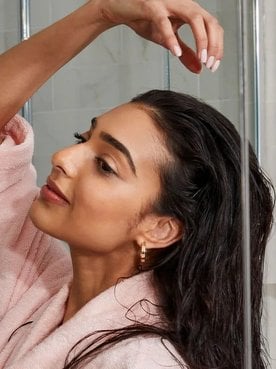
The short answer is: always after. Your shampoo cleanses the scalp and hair of oils, product buildup, and pollutants that would otherwise create a barrier and prevent the mask's active ingredients from penetrating effectively. Applying a mask to pre-shampooed, clean, damp hair ensures maximum absorption and results.
Pro tip: L'Oréal Paris recommends once a week for most hair types, more frequently for hair that is severely damaged, and every 10-14 days for hair in good condition that just needs maintenance nourishment.
A strengthening shampoo is a repair-targeted cleanser that goes beyond regular cleansing. Instead of simply removing dirt and oil, it delivers bonding or protein actives that begin reinforcing weakened hair fibers during the wash itself, setting the foundation for the treatment products that follow. For heat-damaged or chemically treated hair, a strengthening shampoo isn't a luxury; it's the non-negotiable base step.
This is the question at the center of almost every damaged hair routine confusion.
Here's the exact sequence to follow on your mask wash day:
Cleanse thoroughly with the Total Repair 5 Shampoo. Its protein and ceramide-enriched formula reinforces weakened fibers during the wash itself. Rinse well.
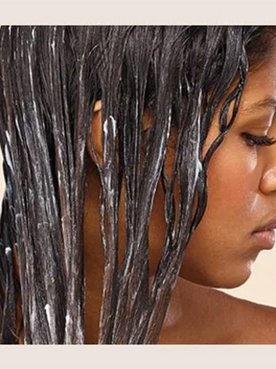
Next, apply the Total Repair 5 Masque to damp lengths and ends, avoiding teh scalp. Leave on 2 minutes.
Rinse thoroughly with cool water. Cool water contracts the hair cuticle and locks the mask’s actives in, while hot water would reopen the cuticle and undo the sealing effect.
Apply a leave-in or finishing serum to damp hair for added humidity protection and smoothness.
On non-mask days, substitute the mask step with your regular conditioner. This alternating approach of using strengthening shampoo in every wash, and mask once a week, is the routine framework L'Oréal Paris recommends for consistent damage repair results.
Not sure which product does what, or when to use each one? Here’s a side-by-side breakdown of how the three core steps in a damage repair routine work together:
|
Primary Function |
Works On |
Frequency |
L’Oréal Paris Pick |
|
|
Strengthening Shampoo |
Cleanses + reinforces weakened hair fibers during wash |
Scalp & hair shaft |
Every wash day |
Total Repair 5 Shampoo |
|
Conditioner |
Surface smoothing, detangling, cuticle sealing |
Hair cuticle (surface) |
Every wash day |
Total Repair 5 Conditioner |
|
Hair Mask |
Deep nourishment, intensive repair of the cortex |
Hair cortex (deep) |
Once a week |
Total Repair 5 Masque |
When used in the right sequence of shampoo, then mask, then serum; these three steps address damage at every level:
Heat-damaged hair occurs when excessive heat weakens the hair’s protein structure, causing the cuticle to lift and the hair to lose moisture, strength, and smoothness.
True heat damage cannot be completely reversed, but consistent use of strengthening and repairing treatments can help improve the hair’s appearance, texture, and overall feel. The key is a two-pronged approach:
Want to explore the best hair masks for dry and damaged hair? Check out our guide on Best Hair Masks for Dry and Heat-Damaged Hair for expert tips, product recommendations, and deeper insights.
Not all repair formulas are built the same. When scanning ingredient lists, these are the actives that genuinely move the needle on damaged hair:
Healthy-looking hair starts with the right repair routine. With consistent care and the right L'Oréal Paris hair mask and strengthening products, dry and damaged hair can feel softer, smoother, and healthier over time.