What Is Hair Serum? The Complete Guide to Smooth, Glossy Hair
Unlock the secret to effortlessly sleek, frizz-free hair


A hair serum is a concentrated, leave-in treatment that coats your hair to tackle specific concerns such as frizz, dryness, dullness and damage. The lightweight formula also helps smooth, protect and add shine to the hair minus the heaviness of a hair mask or hair oil.
Now that you know what is a hair serum, let’s explore how to make the most of this product and how to choose the right serum that actually works for your hair.
Hair serum is a powerful finishing product that transforms dull, frizzy hair into smooth, glossy strands. This guide breaks down how it works, how to use it for different hair types, and how to choose the right formula. It also compares serums with other hair products to help you build a smarter, more effective routine.
Table of Content
A hair serum is a lightweight, silicone-based product that coats the outer layer of your hair to smooth, protect and add an instant glossy finish.
Hair serum works by forming a thin, protective layer over each strand, sealing the cuticle, locking in moisture, and instantly improving how your hair looks and feels.
Pro tip: Generally, serums improve the outer appearance of hair, but they don't repair internal damage, unless the formulation is specifically designed for targeted treatment.
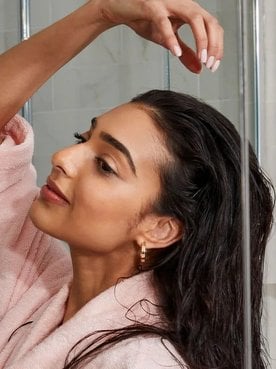
Apply anti-frizz serum 1-2 pumps on damp hair, focusing on mid-lengths and ends to smooth flyaways and control frizz.
Use on slightly damp hair after washing to lock in moisture and add shine. You can also reapply a tiny amount on dry ends for extra smoothness.
Apply on damp hair and scrunch gently to enhance curl definition and reduce frizz without weighing curls down.
Use a small amount on dry hair as a finishing step to add shine and tame flyaways.
Apply a minimal amount on damp hair, avoiding roots, to prevent heaviness while still adding smoothness.
Use hair repair serum before and after styling, on damp hair for protection and on dry hair for a polished, healthy look.
Selecting the right serum depends on your specific hair concerns.
When selecting a product, revisiting what is hair serum helps clarify its purpose, enhancing your hair’s finish while addressing your unique needs.
If you’re wondering how to layer products effectively in your hair care routine, explore The Right Way To Layer Products In Your Haircare Routine for expert insights.
|
Product Type |
Function |
Texture |
Key Benefit |
|
Hair Serum |
Surface smoothing |
Lightweight |
Shine + frizz control |
|
Hair Oil |
Deep nourishment |
Heavier |
Long-term hydration |
|
Leave-in Conditioner |
Moisture & detangling |
Creamy |
Softness + manageability |
|
Hair Cream |
Styling & control |
Medium |
Hold + definition |
This comparison makes it easier to understand what hair serum is and how it differs from other products in your routine.
Great hair doesn’t happen by chance; it’s built through the right and informed choices. A well-chosen serum can instantly refine texture, boost shine, and bring effortless polish to your look. With consistent use, it doesn’t just elevate how your hair appears; it transforms how it feels, soft, smooth, and undeniably healthy.