A Guide on Liver Spots: Causes, Symptoms, & Skincare for Liver Spots
Understand liver spots and how to care for them.
Understand liver spots and how to care for them.




Ever wondered why small, flat, brown spots appear on your face, hands, or arms? Years of sun exposure can lead to darker patches on the skin, commonly known as liver spots, sunspots, age spots, or solar lentigines. While these spots are generally harmless, they can be a visible sign of accumulated sun exposure.
With a consistent skincare routine, targeted ingredients, and daily sun protection, you can help improve the appearance of uneven pigmentation. Read on to understand what causes liver spots, recognize the symptoms of liver spots, and explore skincare options for a more even-looking complexion.
Liver spots are flat, brown patches that commonly develop on sun-exposed areas of the skin. Learn the common causes and symptoms of liver spots and how to recognize them. Explore targeted skincare ingredients, daily routines, and liver spots treatment options for more even-looking skin.
Table of Contents
Liver spots are small, darkened patches that commonly appear on sun-exposed areas such as the face, hands, arms, and shoulders. Despite their name, liver spots are not related to liver function. They are also known as age spots or sunspots and can vary in size and color.
Wondering what causes liver spots? The most common factors include:
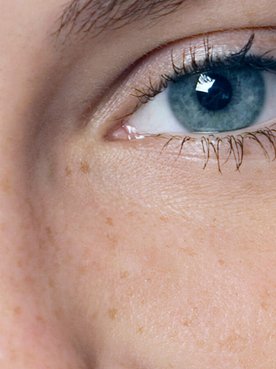
The symptoms of liver spots can help distinguish them from other types of pigmentation. They typically appear as:
If a pigmented spot changes noticeably in size, shape, color, or texture, consult a dermatologist for evaluation rather than assuming it is a liver spot.
Choosing the right ingredients can help target the appearance of pigmentation as part of a consistent skincare routine.
Glycolic acid is an alpha-hydroxy acid (AHA) known for its exfoliating properties. It helps remove dead skin cells from the surface and promotes skin cell turnover, helping reveal a brighter, more even-looking complexion.
Vitamin C is an antioxidant that helps brighten the appearance of skin and visibly reduce discoloration. It can also help protect the skin from environmental stressors when used as part of a daily skincare routine.
Retinoids are vitamin A derivatives known for supporting skin cell turnover. They can help improve the appearance of uneven skin tone and pigmentation over time.
Niacinamide is a form of vitamin B3 that helps improve the appearance of uneven skin tone and pigmentation while supporting the skin barrier.
Kojic acid is commonly used in skincare formulated for pigmentation. It helps target melanin production and can help improve the appearance of dark spots with consistent use.
Melasyl™ is a multi-patented molecule introduced by L’Oréal Paris that helps target localized pigmentation, including dark spots, age spots, and post-acne marks.
A consistent routine can help support a more even-looking complexion. Here is a simple morning and evening approach:
Start with a mild, exfoliating cleanser to remove impurities and prepare your skin for the rest of your routine.
Exfoliate 2-3 times a week based on your skin’s tolerance to help remove dead skin cells.
Apply a face serum for liver spots to target the appearance of pigmentation and promote a brighter-looking complexion.
Follow with a day cream for liver spots to moisturize the skin and complement your pigmentation-focused routine.
Daily sun protection is essential when addressing pigmentation. Apply a sunscreen with SPF 50 as the final step of your morning routine and reapply when needed, especially when spending time outdoors.
Read our guide on Skincare Routine Order: A Guide on Layering Skincare Products Correctly to understand the correct order for your products.
Cleanse your face to remove dirt, oil, makeup, and sunscreen from the day.
Apply a targeted serum to address the appearance of dark spots and uneven skin tone. If dark circles are also a concern, you can use an eye serum for dark circles.
Finish your routine with a glowing night cream to moisturize your skin overnight.
Liver spots usually appear after 50, but they can affect people of all age groups. With the proper skincare for liver spots with potent ingredients and products, you can restore a brighter, more even-toned complexion. You can also use the L’Oréal Paris Skin Genius tool for personalized skincare routine and product recommendations.
Liver spots are flat, brown patches caused mainly by prolonged sun exposure. Daily sunscreen can help prevent further sun-related pigmentation.
Glycolic acid, vitamin C, niacinamide, and Melasyl™ can help improve their appearance. Daily sunscreen helps protect against further pigmentation.
Prolonged UV exposure can trigger excess melanin production, leading to liver spots. Genetics and fair skin can also increase the risk.
Yes, liver spots are also commonly called age spots or sunspots. They usually appear on areas frequently exposed to sunlight.
Liver spots typically do not fade quickly without targeted care. Consistent skincare and sun protection can help improve their appearance.